
The Context-by-Context Method
Read Scripture in Context. Know Its Truth with Confidence.
Move beyond isolated verses to discover how each passage fits within the larger message of God’s Word—and apply what you learn with care.
Imagine, if you will, being high in an aircraft, or on a mountaintop. As you look out, you can see the countryside and how all of the parts of it fit together. Yet, you do not see a lot of detail.
As you descend to lower levels, each level of descent brings more of the countryside into a closer view. You begin to lose sight of the entire countryside, but its various parts come into more detail.
The further you descend, the more detail: you begin to see forests, fields, water sources; then trees, different colors, fields being cultivated; after this you begin to see groupings of branches, vegetation, plant life; Gong further you can see individual leaves, fruits and vegetables; finally you can examine the details of each piece of fruit, the flowers, the seeds.
This is what it is like to study the Bible in its given contexts. We have the entire Bible to consider, then the Two Testaments. After that, we can see that these Testaments are made up of Groupings and Types; then there are the individual Books and Letters; after this are the Sections and Paragraphs of the writings, then sentences, and finally the individual words. During this you also see different "colors" or "genres" scattered throughout. Yet, while each of these contexts are unique, they each are a part of the broader view surrounding it.
When Gospel Interpretations Differ
The Word of God is where people receive Light and Truth. The Gospel needs to be clear and from God's Word.

Let the Passage Speak in Its Context
The Context-by-Context method begins with a simple principle: a verse is best understood as part of a passage, not as a statement standing alone. Read what comes before and after it, follow the flow of the book, and consider how the passage fits within the message of Scripture. This approach helps you recognize what the text is saying before deciding what it means for your life. Whether you study on your own or lead a group, learning to examine context gives you a clearer, steadier way to handle God’s Word.
The Context-by-Context method os Study is a way to discover the Eternal truths that the Lord has given to us in the written Scriptures. There are three foundational lessons.
Lesson1 1: Foundation
Learn the various contexts found in the Bible. See how they work together to clarify understanding.
Lesson 2: Inspiration
A study in Hebrews 1 and 2 Peter, considering the various contexts. Here the source and purpose of Scriptures is discussed.
Lesson 3: Application
Learn how to work with the Holy Spirit in our study, to properly interpret for application in life.
Additional Lessons to provide more skills in study are available.
Advanced Lessons address other study skills, such as how to do Word Studies, Topical studies, Proper Interpretive Methods and a variety of deeper topics useful in study.
There are also other lessons addressed more directly to Teachers and Leaders: How to Prepare and Present a lesson, using visual aids, setting clear objectives.
Fundamental Principles of Study
1. God communicated to people in written form;
2. The Holy Spirit communicated the written Word through chosen men using their vocabularies, as well as their purpose for writing;
3. Words have specific meaning;
4. Grammar is necessary to construct sentences, paragraphs, and to convey meaning;
5. Context determines the meanings of word usage and the Truth being conveyed;
6. The original readers understanding of the text must be considered;
7. Truth is exclusive by its very definition;
8. Truth cannot change, application can vary.
9. Application always comes after Truth, and cannot be the source of Truth;
Two other important thoughts:
1- Chapters and verses are not inspired, are not original to the Bible. Chapters were added in 1227AD, verses in the Old Testament in 1448AD and the New Testament as early as 1509AD, and the first entire Bible in 1528AD. The latest version was published in 1555AD.
2- Read through the entire book (if possible) in one sitting, and look for the author's flow of thought. Try to ignore the chapters, verses, and the inserted study headings.

Follow the Context, Find the Meaning
Context-by-Context is an accessible way to study Scripture by asking how the surrounding text shapes a passage's meaning. These habits help individuals study, teachers and leaders guide discussions, and churches grow in understanding, application, and unity.
01
Read the Surrounding Passage
02
Trace the Author's Flow of Thought
03
Compare Relevant Biblical Contexts
04
Apply What the Text Teaches
Step 1
Begin with the Passage
In the first foundational lesson, learn to read a passage as a whole before drawing conclusions from a single verse or word.
Step 2
Consider Its Contexts
The second lesson helps you examine the surrounding text and its setting so your understanding stays grounded in Scripture.
Step 3
Connect Meaning and Application
The third lesson brings the contexts together, helping you understand what a passage teaches and apply its truth faithfully.
Step 4
Practice Together
Learn all three foundational lessons through interactive, face-to-face training, either in person or live online, over a weekend or on separate days.
Keep Growing in the Word
Build on the foundational lessons with ongoing training and prepared studies that put Context-by-Context skills to work.
Intermediate and Advanced Lessons
Develop additional skills and tools for studying Scripture more carefully as you continue to grow.
Training for Teachers and Leaders
Learn to prepare from the biblical text and guide thoughtful, Scripture-grounded group discussions.
Prepared Bible Studies
Explore Old Testament, New Testament, and topical studies designed for individual reflection or group discussion.

Confidence That Strengthens the Whole Church
Context-by-Context study gives individuals an accessible way to approach Scripture with confidence rather than relying on isolated verses or competing interpretations. Teachers and leaders can prepare with greater clarity and lead discussions that stay rooted in the passage. As people study and practice what they learn together, churches can grow in understanding, faithful application, and unity in belief.
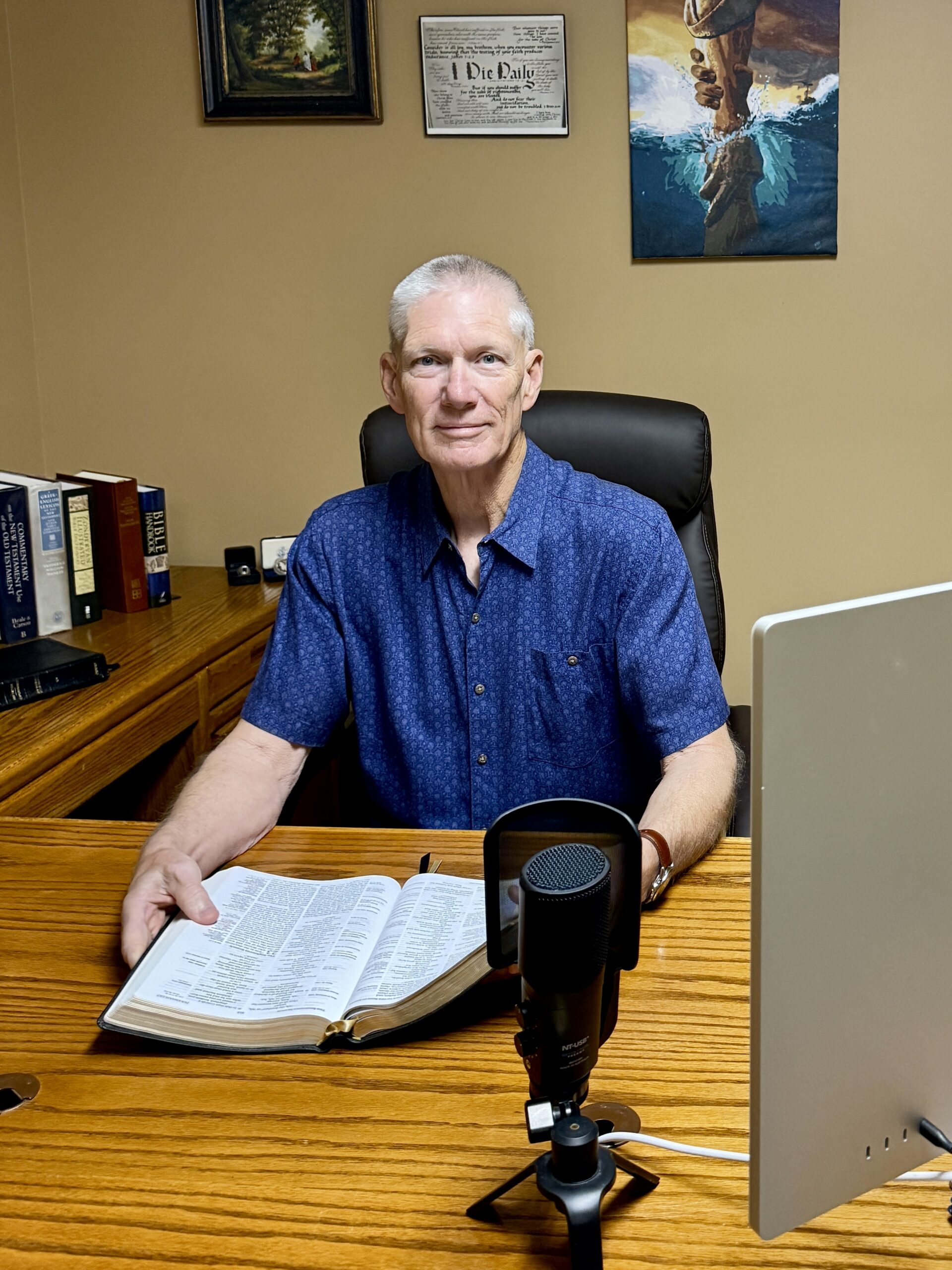
Dr. Rick Wolgamott
Dr. Rick Wolgamott earned his BS, MA, MDiv, and DMin from Liberty University. A former full-time pastor and missionary, he has made more than 25 overseas mission trips to share the Gospel, teach people to study Scripture, and encourage local churches. He has taught young people, adults, and church leaders around the world in conferences, outreach settings, and congregations. Today, he continues to serve through mission trips and by equipping people to read the Bible in context, apply its truths, and share the Gospel with confidence.
“Study the passage in its context, then put its truth into practice.”
What Context-by-Context Makes Possible
“Looking at the whole passage instead of one verse helped me see what the writer was actually saying. I now approach my personal Bible study with greater confidence.”

A Bible Study Participant
Individual learner
“Our discussions became more thoughtful when we started asking what the surrounding chapters contributed. More people joined in because they could follow the text for themselves.”

A Small Group Leader
Group discussion facilitator
“This approach gives me a clear way to prepare lessons and guide questions back to Scripture. It helps our group move from interpretation to faithful application.”

A Church Teacher
Adult Bible class teacher
“Learning to study in context gave our ministry a shared starting point. As people practiced what they discovered, conversations grew more constructive and our church grew closer.”

A Ministry Leader
Church leadership team member
Bring Context-by-Context Lessons to Your Group
Planning Bible study training for your church or small group? Ask Dr. Rick Wolgamott to lead the interactive lessons in person or live online. Based in Lincoln, Nebraska, he welcomes inquiries about helping your group study Scripture with confidence.